A First Clear Creek Trail Walk: Pick Your Starting Point on the Map
Use the official Clear Creek Trail map to choose a starting point and plan a first walk without guessing access or trail conditions.
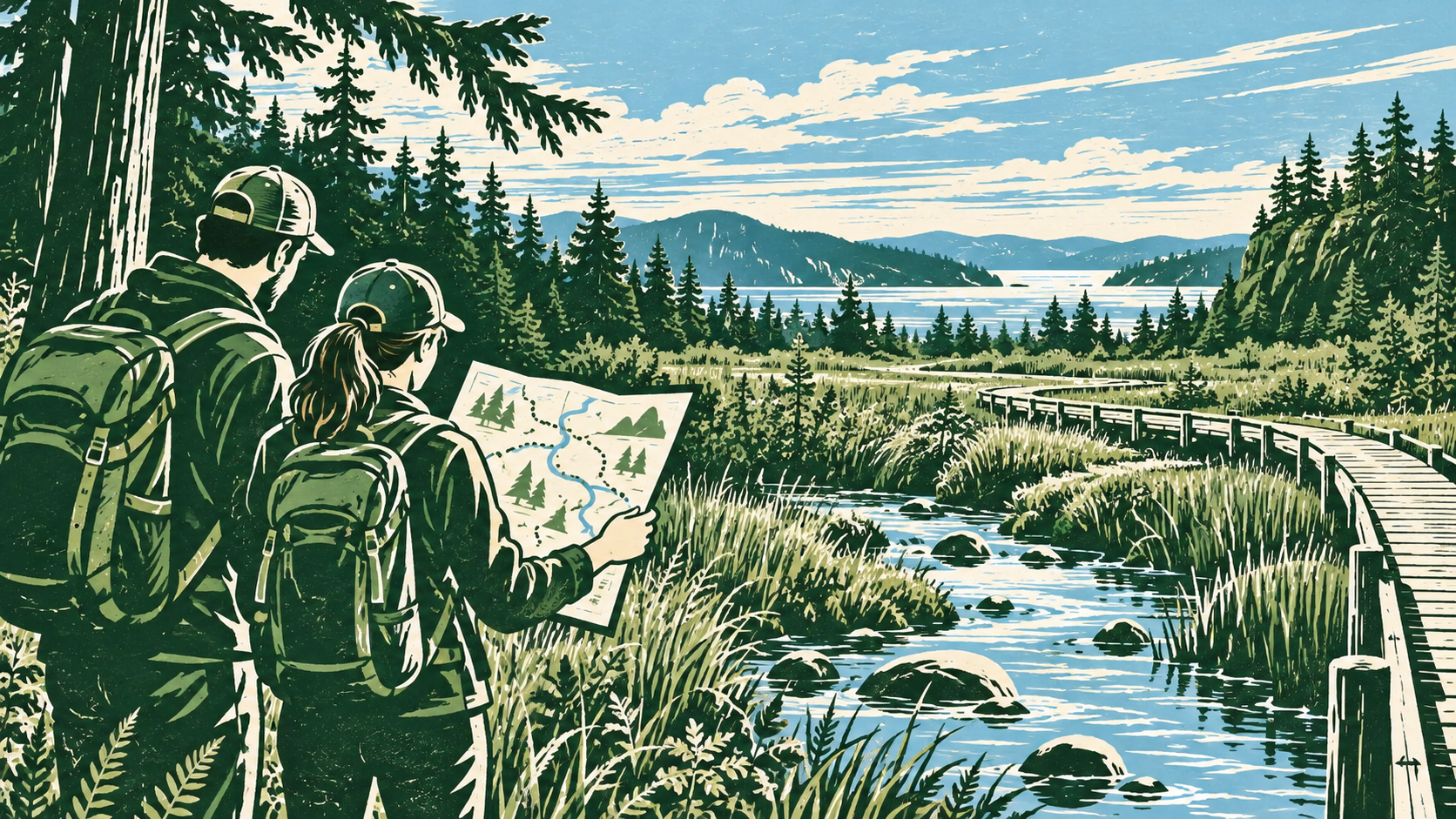
Plan your first Clear Creek Trail walk by selecting a starting point and a manageable portion of the mapped route. The trail system has several access points, so “meet at Clear Creek” is not a complete meeting instruction.
Great Peninsula Conservancy’s Clear Creek Trail page describes a Silverdale corridor extending from Waterfront Park toward Schold Farm and links the trail map. Use that map to choose the section you want to explore rather than assuming the nearest search-result pin represents the whole system.
Agree on the same trailhead
Send your group the name of the access point, the official map link, and the place you intend to meet. Ask everyone to confirm they are looking at the same location. If a map label or parking arrangement is unclear, resolve it before departure.
Choose an out-and-back segment if that makes the return easier to understand. Set a turnaround time appropriate to your group instead of treating the length of the entire trail system as a target.
Check the section, not just the trail name
Review current notices and the map for the specific portion you intend to use. Do not assume that information about one trailhead establishes parking, surface, or accessibility conditions elsewhere.
The conservancy describes the system as a nonmotorized trail. For any activity beyond an ordinary walk, confirm the current rules that apply to that section. If someone has mobility or other access needs, seek specific current information rather than relying on a broad accessibility label.
Make a small observation plan
Pick one thing to notice along the walk: a change in habitat, the relationship between the creek and nearby development, or an unfamiliar plant to research later from a photograph. Leave identification uncertain when you do not know it, and keep the outing separate from collecting or disturbing anything.
Save your chosen starting point and turnaround plan. They give you a repeatable walk you can adjust after seeing what suits your group.
Source checked September 24, 2026. This is a planning guide, not a report of current trail conditions.